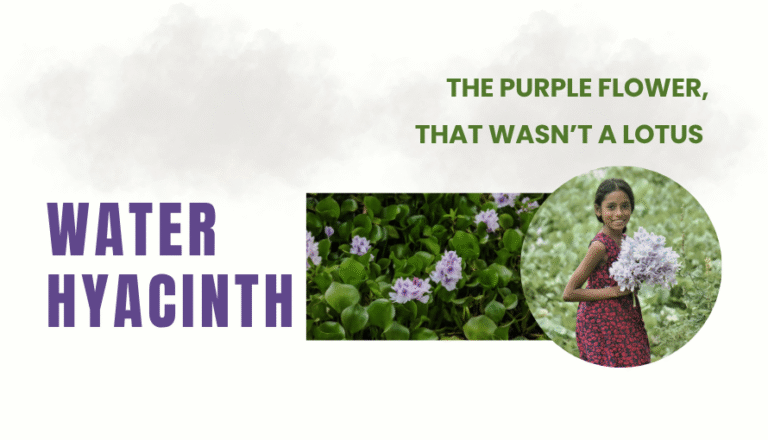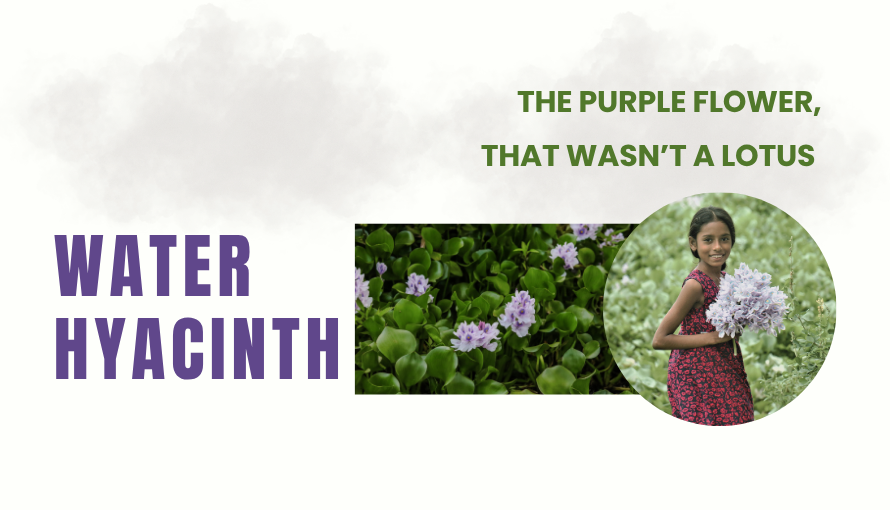
A mat of water hyacinth can choke a lake. The same plant can end up on a shop shelf as a woven basket. What happens between those two places determines whether it can become a viable business: can harvesters recover usable stalks, can artisans deliver consistent quality, and will buyers come back for a second order?
Part 1 explored how water hyacinth spreads and why it is so difficult to manage. Part 2 follows the harvested plant into the workshop and on to the buyer, looking at harvesting innovations, material choices, and the suppliers and artisan groups turning it into useful products.
Market Opportunity: Where Water Hyacinth Fits
Europe imported approximately US$900 million in basketry in 2024, with natural materials accounting for about 79% of import value, according to CBI’s analysis of the European basketry market. Water hyacinth is grouped with other natural materials, including seagrass, jute and abaca, so the data does not show how much of that trade came from water hyacinth. For producers, the figures point to an established market for natural-material basketry in which water hyacinth is one of several options.
For broader context, Business Research Insights’ sustainable products market forecast projects growth from US$412.12 billion in 2026 to US$803.68 billion by 2035, at a reported compound annual growth rate of 7.7%. The forecast covers a wide range of products and provides general market context; it does not measure demand for water hyacinth.
The commercial opportunity starts with a specific product and a buyer willing to pay a price that covers production and delivery. A first order shows that the product has found a buyer. Repeat orders show whether its price, quality and delivery hold up in practice.
That brings us to the next question: which form of water hyacinth suits the product you want to make?
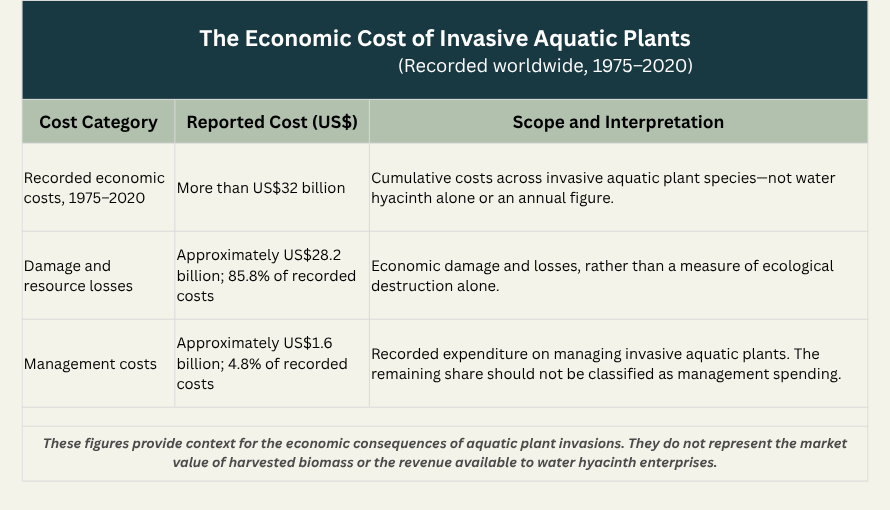
For deeper insights into the economic costs and ecological impacts of invasive aquatic plants worldwide, refer to Nadja Neumann’s article, “High economic damage caused by invasive aquatic plants worldwide,” published by the Leibniz Institute of Freshwater Ecology and Inland Fisheries (IGB).
From Lake to Loom: What Skilled Hands Can Make
Against this background, using harvested material offers a different question: what useful purpose might it serve after removal?
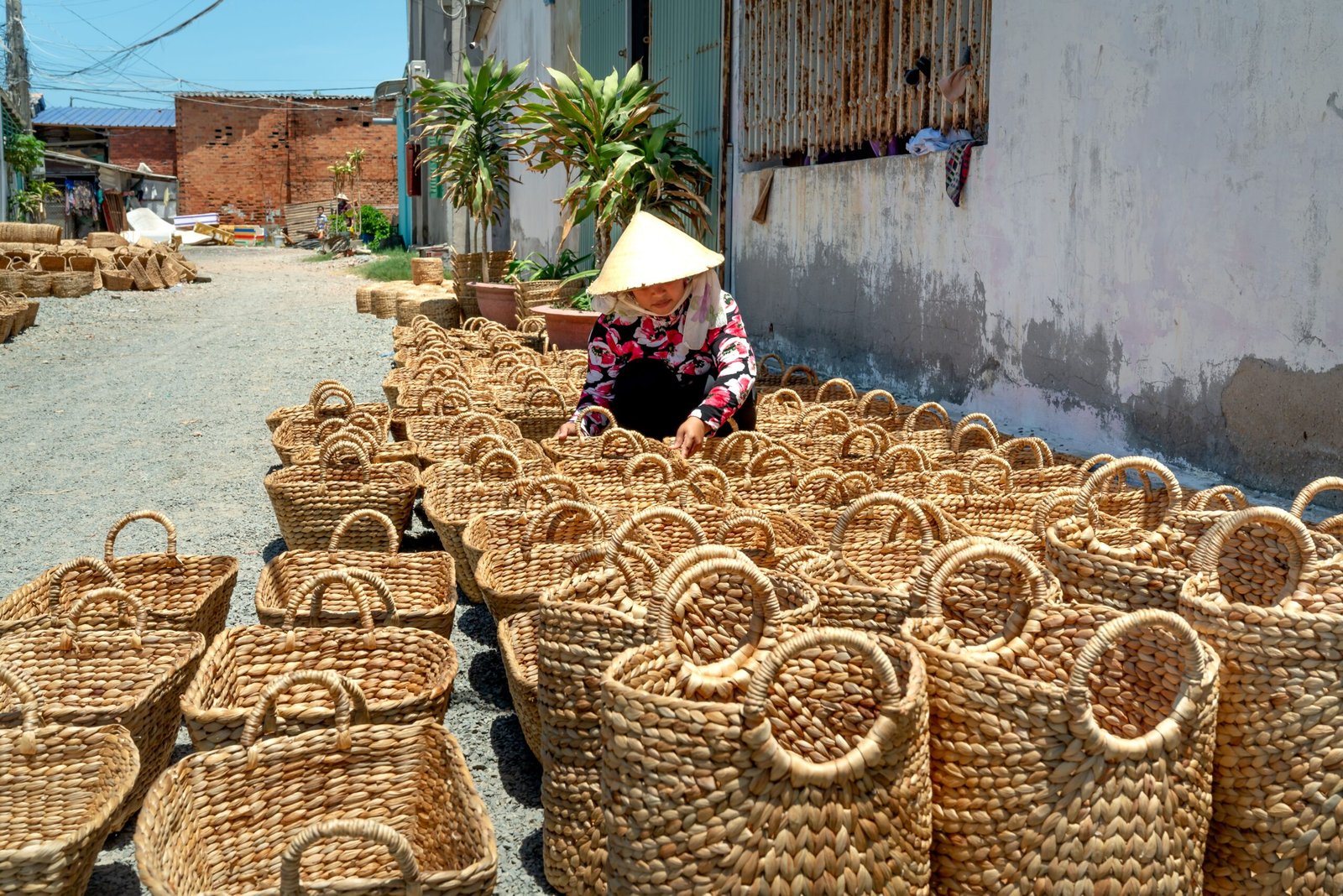
The transformation begins with the plant’s long leaf stalks, often called stems. Artisans harvest, clean and sort them, then dry them thoroughly. This step matters: excess moisture can compromise shape, quality and storage. Once prepared, the stalks are flattened, twisted or braided before being woven into useful objects.
Across craft communities in Asia, Africa and beyond, these techniques turn water hyacinth into baskets, handbags, trays, placemats, floor mats and decorative accessories. Woven around supporting frames, it also becomes furniture surfaces and lampshades. From floating stalk to finished basket, careful preparation and skilled hands give the material a new purpose.
Who is turning this possibility into purposeful products? Explore selected enterprises and artisan initiatives transforming invasive water hyacinth into thoughtfully crafted goods, connecting design with livelihood opportunities and productive use of harvested material.
[INTERNAL LINK PLACEHOLDER: Part 3—Meet the Enterprises Turning Water Hyacinth into Purposeful Products]
More Than Baskets
Beyond weaving, water hyacinth has applications in handmade paper and compost, alongside research into biogas and other biomass conversions. Its ability to absorb certain pollutants has also attracted interest in controlled water-treatment systems. However, contaminants accumulated in the plant remain a concern after harvesting.
Material from polluted water requires source assessment and appropriate testing before reuse, particularly in agriculture or products involving contact with people or food. Composting does not destroy heavy metals. A promising application does not establish that every batch is suitable—or that the process is commercially viable. These require separate assessment before production expands.
Beyond baskets, water hyacinth connects emerging technology with traditional knowledge. A proposed project in Kenya aims to turn water hyacinth and sugarcane bagasse into biogas, electricity and organic fertiliser, while farmers in Bangladesh use floating beds made from water hyacinth and other plant residues to grow crops in waterlogged areas. INTERNAL LINK PLACEHOLDER: Explore these two approaches in Part 2: Beyond Handicrafts.
Natural, but Not Automatically Sustainable
A natural ingredient alone does not establish the environmental performance of a finished product. Processing, transport, coatings, adhesives and supporting materials all influence the result.
Untreated plant material can biodegrade under suitable conditions, while a finished composite containing synthetic resin may require a different disposal route. Claims about biodegradability or compostability need to identify the relevant conditions and cover the complete product.
Material transparency helps buyers understand these differences. A basket made with a metal frame, a coated paper sheet and an untreated woven mat may all contain water hyacinth, yet their performance and disposal options differ.
How does this transformation work in practice? Part 2 explores material forms, harvesting technologies and the enterprises and artisan initiatives turning water hyacinth into products.
[INTERNAL LINK PLACEHOLDER: Part 2—Understanding Water Hyacinth: Species, Material Forms and Technical Properties]
Made to Last with the Right Care
Water hyacinth products have no universal lifespan. Durability depends on preparation, weaving, reinforcement, finishing and the conditions in which the product is used.
For many woven goods, avoiding prolonged dampness is a practical starting point. Gentle dusting, avoiding soaking and prompt drying after accidental dampness can help preserve the material. Product-specific instructions should take priority, especially where coatings, linings or supporting frames are present. Lifespan claims should rest on testing or documented experience. A well-prepared indoor basket and an outdoor product exposed to rain require different expectations.
Beyond the Blue Flower
A plant that overwhelms a lake can become a useful everyday object—but the journey takes more than harvesting. Collection, transport, cleaning, drying and storage all carry costs. For artisans to earn a dependable livelihood, these activities need an organised supply chain, fair payment and buyers who return.
An artisan cluster can bring that organisation: shared drying facilities, tools, training and quality standards, supported by coordinated sourcing and production. Designers can help turn traditional skills into practical products, while research and development explore new applications in paper, packaging and fibre-based materials. Each promising idea must move beyond the laboratory to prove its safety, durability, affordability and suitability for everyday use.
Could some of these materials replace plastic? Potentially, in selected applications where testing demonstrates comparable performance and a better environmental outcome. Plastic substitution requires attention to the whole product: synthetic coatings, adhesives or resins may limit biodegradability, and replacing plastic does not remove pollution already in the environment.
The little girl once mistook a blue flower for a lotus. Her next discovery could be more hopeful: with careful research, skilled hands and responsible enterprise, a troublesome plant can find a useful place in everyday life.
Continue the Journey
[INTERNAL LINK PLACEHOLDER: READ PART 2]
Click here for Part 2: From Material Potential to Commercial Reality
What does it take to turn an invasive plant into a product buyers want? Explore harvesting innovations, material forms, technical properties and buyer checks, alongside a curated list of suppliers and artisan initiatives turning water hyacinth into useful goods.
Click here for Part 3: From Workshop to Destination
What does a water hyacinth product really cost by the time it reaches an international buyer? Explore import and export requirements, testing, packaging and logistics, with a worked hypothetical example covering production losses, sea freight, customs clearance, duties and delivery.
“Hey reader, I’ve poured my experiences and thoughts into this blog with the hope of sparking curiosity and conversation.
If this resonated with you, or if you share similar interests, I’d be delighted to continue the conversation. Your feedback truly means a lot.
Feel free to drop me a message or visit my website for more stories and insights.“